

+918048037310

Currently it only shows your basic business info. Start adding relevant business details such as description, images and products or services to gain your customers attention by using Boost 360 android app / iOS App / web portal.

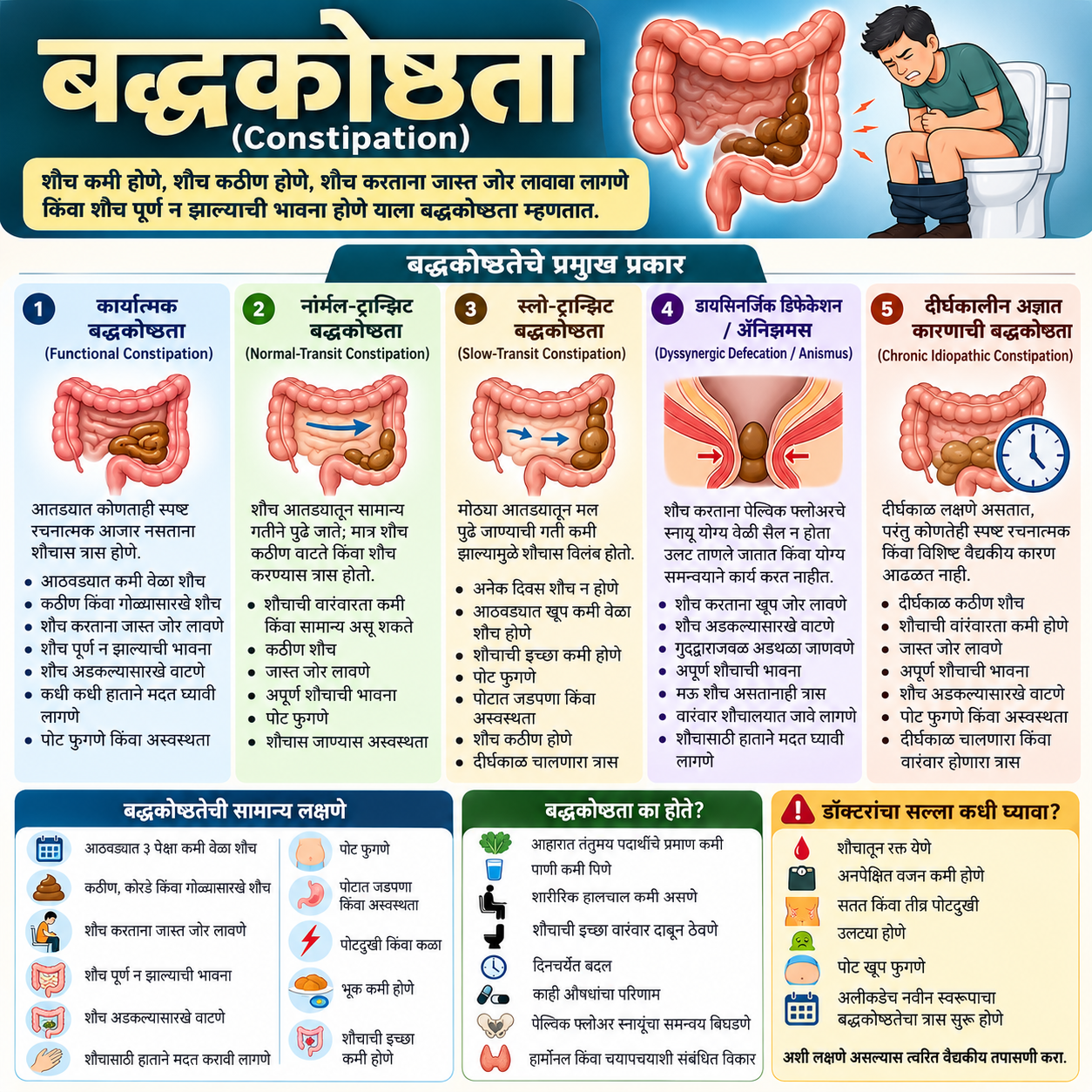
FUNCTIONAL CONSTIPATION Functional constipation is a common gastrointestinal disorder characterized by infrequent bowel movements, hard or lumpy stools, straining, and a sensation of incomplete evacuation, occurring without any structural, anatomical, or metabolic abnormality. DEFINITION AND DIAGNOSIS: ROME IV CRITERIA Doctors typically diagnose functional constipation using the Rome IV Criteria. Symptoms must have started at least 6 months before diagnosis and be present during the last 3 months, including two or more of the following: 1. Passing fewer than 3 bowel movements per week. 2. Straining during more than 25 percent of bowel movements. 3. Lumpy or hard stools, Bristol Stool Scale Types 1 or 2, in more than 25 percent of bowel movements. 4. Sensation of incomplete evacuation in more than 25 percent of bowel movements. 5. Sensation of anorectal obstruction or blockage in more than 25 percent of bowel movements. 6. Need for manual maneuvers to facilitate bowel movements, such as digital evacuation or pelvic floor support, in more than 25 percent of bowel movements. 7. Loose stools are rarely present without the use of laxatives. SUBTYPES OF FUNCTIONAL CONSTIPATION Adult functional constipation is generally divided into three clinical categories. 1. Normal Transit Constipation Waste moves through the colon at a normal speed. Stool frequency is often normal, but the patient experiences hard stools, bloating, or abdominal discomfort. 2. Slow Transit Constipation The colonic muscles move waste through the large intestine more slowly than normal. This may be associated with impaired nerve signaling. 3. Defecatory Disorders or Pelvic Floor Dyssynergia The muscles and nerves of the pelvic floor and anal sphincter fail to coordinate properly during an attempt to pass stool. COMMON CAUSES AND RISK FACTORS Dietary Habits Low dietary fiber intake and inadequate fluid consumption. Lifestyle Factors Sedentary behavior, lack of physical exercise, and ignoring the urge to defecate. Behavioral Factors in Children Stool withholding may develop after a painful bowel movement, leading to harder stools and a recurring fear of toileting. Other Triggers High stress, anxiety, and changes in daily routines. MANAGEMENT AND TREATMENT APPROACH Management focuses on lifestyle interventions, dietary adjustments, and appropriate medical therapies. 1. Dietary Fiber Gradually increase dietary fiber intake, aiming for approximately 22 to 34 grams daily in adults, through whole grains, vegetables, fruits, and legumes. Maintain adequate fluid intake. Fiber supplements or bowel regulators, such as Softovac Bowel Regulator containing isabgol, may be considered when appropriate. 2. Physical Activity and Toilet Routine Engage in regular physical activity and establish a consistent toilet routine. Sitting on the toilet for 10 to 15 minutes approximately 20 to 30 minutes after meals may help promote bowel movements. 3. Pharmacological Options Osmotic Laxatives Polyethylene glycol or milk of magnesia may help draw water into the stool. Stimulant Laxatives Senna or bisacodyl may be used for short-term relief when appropriate. Other Medications Prosecretory agents or stool softeners may be prescribed by a physician depending on the patient’s condition. 4. Behavioral and Pelvic Floor Therapy Biofeedback therapy may help patients with pelvic floor dyssynergia. Structured toilet training and behavioral support may benefit children with stool withholding. PROCTOMAX SURGICARE CLINIC Expert and Trusted Care for Your Health DR. PIYUSH VISHNU GARUD M.S. General Surgeon Certified Training in Laparoscopic Surgery Accredited by the Royal College of Surgeons of England, London Certified Training in Laser Surgery Amils Academy, Mumbai Former Surgery Registrar Deenanath Hospital, Pune, General Surgery Department Assistant Surgeon, Urology Department Manipal Hospital, Baner CLINIC 1 Kalpavruksha Society, Shop No. 4 Jawalkar Nagar, Pimple Gurav, Pune 411061 CLINIC 2 Ratnatara Complex, Near Sagar Dairy Above Airtel Store, Kranti Chowk Mahalaxmi Road, Navi Sangvi, Pune 411021 Contact: 9096222036 Website: www.proctomax.com Instagram: @proctomax_surgicare_clinic EXPERT. SAFE. TRUSTED. PROCTOMAX SURGICARE CLINIC Expert and Trusted Care for Your Health


